

Dreaming of golden sunsets on Thai beaches while sipping coconut water? 🏖️ Thailand’s retirement visa seems like the perfect ticket to your twilight paradise. But what if you’re not quite ready to hang up your work boots? Can you actually work in Thailand with a retirement visa?
The answer isn’t as straightforward as you might hope. While Thailand welcomes retirees with open arms, the rules around working during retirement can be as complex as navigating Bangkok’s bustling streets. 🚗 Many expats find themselves caught between the allure of Thai retirement and the desire (or need) to continue earning.
In this post, we’ll unravel the mysteries of Thailand’s retirement visa, explore the legal landscape of working during retirement, and discover alternative options for those itching to stay active in their golden years. We’ll guide you through the process of potentially converting your retirement visa to a work permit and examine how working might impact your retirement benefits. So, let’s dive in and demystify the world of working in Thailand as a retiree! 🇹🇭💼
Understanding Thailand’s Retirement Visa

Eligibility requirements
To obtain a Thailand retirement visa, applicants must meet specific criteria:
- Age: 50 years or older
- Financial requirements:
- Monthly income of 65,000 THB or
- 800,000 THB in a Thai bank account
| Requirement | Option 1 | Option 2 |
|---|---|---|
| Financial | 65,000 THB/month | 800,000 THB in bank |
Application process
The application process involves several steps:
- Gather required documents
- Submit application at Thai embassy or consulate
- Pay visa fees
- Undergo medical examination
- Obtain necessary stamps and signatures
Legal Restrictions on Working with a Retirement Visa
Prohibition on employment
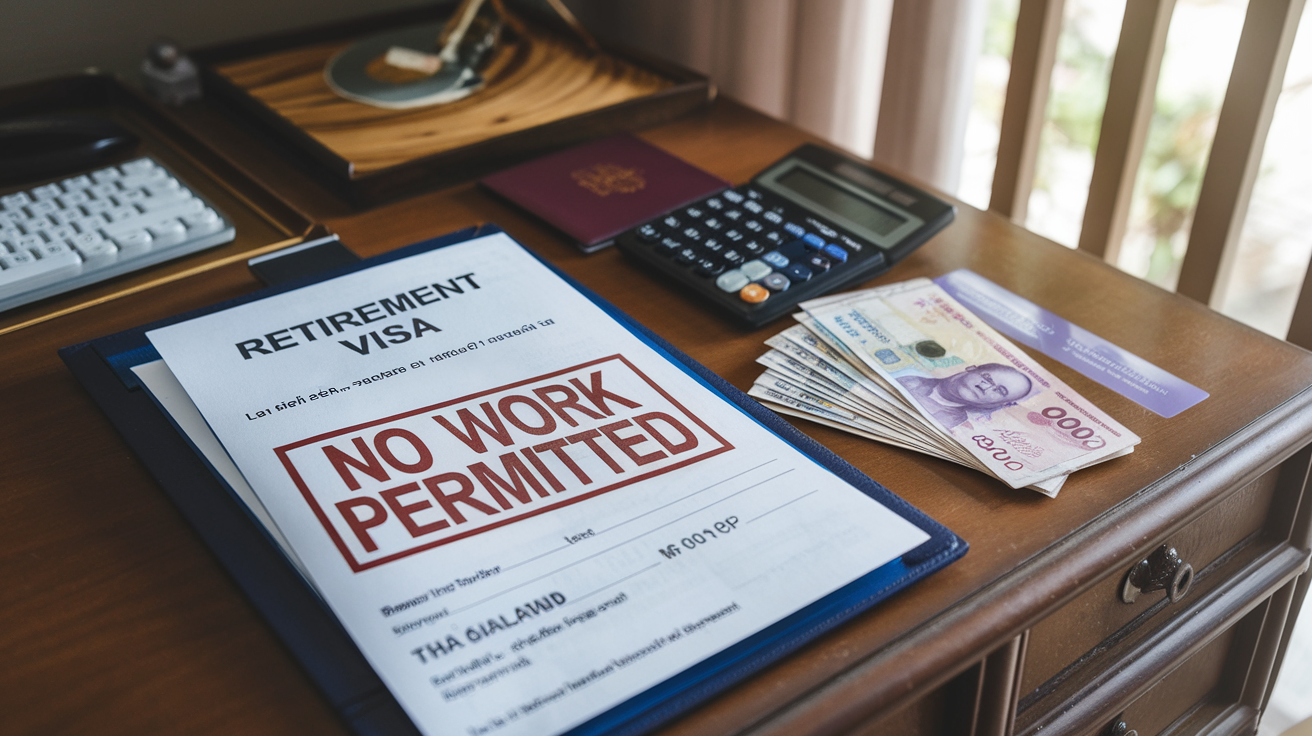
Holders of Thailand’s retirement visa (Non-Immigrant O-A) are strictly prohibited from engaging in any form of employment. This includes both paid and voluntary work. The visa is designed for retirees who can support themselves financially without the need for local employment.
Consequences of illegal work
| Violation | Consequence |
|---|---|
| Working illegally | Visa cancellation |
| Overstaying | Fines and deportation |
| Repeated offenses | Blacklisting |
Engaging in unauthorized work can result in severe penalties, including visa cancellation, fines, deportation, and potential blacklisting from future entry into Thailand.
Alternative Options for Retirees Wanting to Work

Volunteer opportunities
- Non-profit organizations
- Environmental conservation
- Community development
- Cultural exchange programs
Starting a business
| Business Type | Initial Investment | Potential ROI |
|---|---|---|
| Online | Low | Medium-High |
| Consulting | Low-Medium | High |
| Franchise | High | Medium-High |
While retirees can’t work traditionally with a retirement visa, they have alternatives. Volunteering allows meaningful engagement without violating visa rules. Starting a business or investing in Thailand offers financial opportunities, but requires careful planning and compliance with regulations. Teaching English part-time can be fulfilling, though proper certifications may be necessary.
Converting a Retirement Visa to a Work Permit
Conditions for conversion
- Age requirement: 50 years or older
- Valid retirement visa (Non-Immigrant O-A)
- Job offer from a Thai company
- Minimum salary requirement: 50,000 THB/month
Required documentation
| Document | Description |
|---|---|
| Passport | Valid for at least 6 months |
| Visa | Current Non-Immigrant O-A visa |
| Work Permit Application | Completed and signed |
| Job Offer Letter | From Thai employer |
| Company Documents | Business registration, tax papers |
Processing time and fees
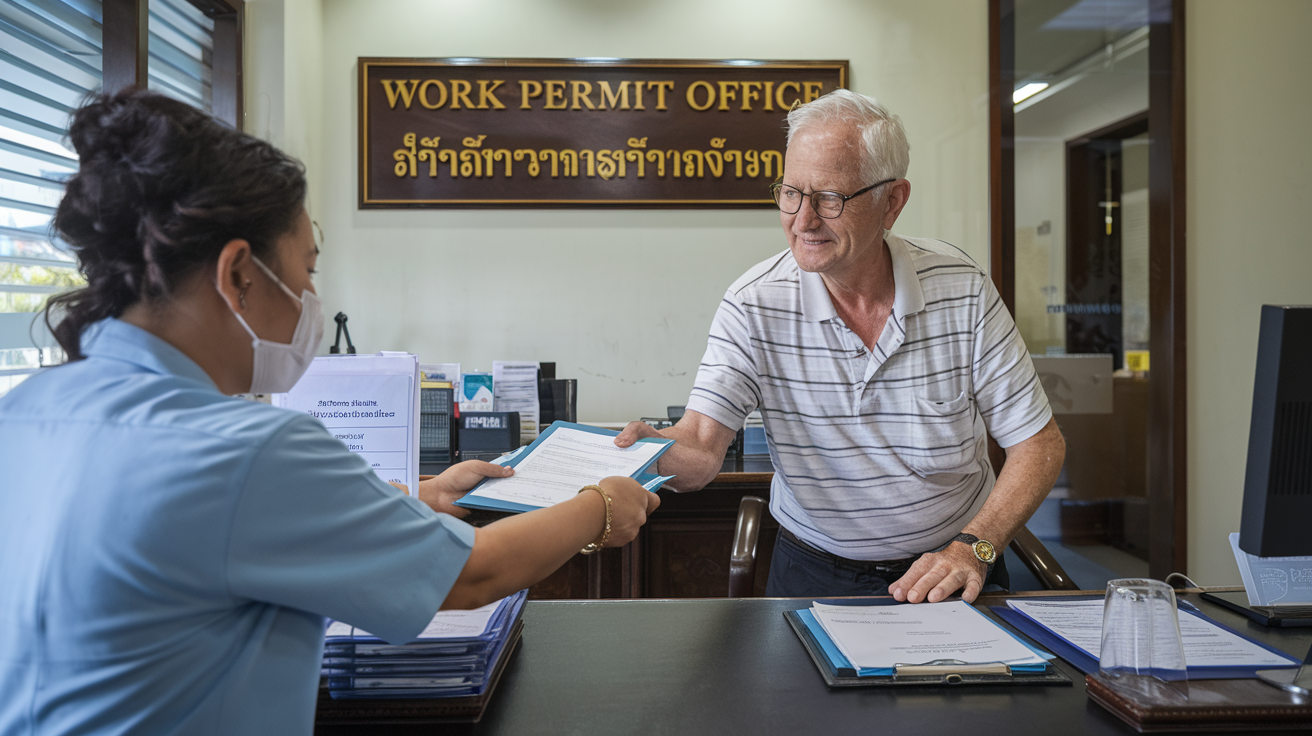
Converting a retirement visa to a work permit typically takes 2-4 weeks. Fees vary but generally range from 3,000 to 5,000 THB. The process involves submitting documents to the Ministry of Labor and attending an interview. Once approved, you’ll receive a new Non-Immigrant B visa and work permit.
Impact of Working on Retirement Benefits
Thai social security system
- Not applicable to retirement visa holders
- No contributions or benefits for retirees
- Limited healthcare coverage for non-working expatriates
Tax implications
| Income Type | Tax Rate |
|---|---|
| Employment | 0-35% |
| Pension | 0-35% |
| Investment | 15% |
Working retirees must report income and pay taxes. Failure to comply may result in penalties and affect visa status. Consulting a tax professional is advisable to navigate complex Thai tax laws and ensure compliance with both Thai and home country regulations.

Thailand’s retirement visa offers a welcoming opportunity for retirees to enjoy their golden years in the Land of Smiles. However, it’s crucial to understand that this visa does not permit employment. Retirees seeking to work must explore alternative options, such as converting their visa to a work permit or considering volunteer work within legal boundaries.
For those determined to work in Thailand, careful planning and adherence to local regulations are essential. Whether you choose to pursue a work permit or engage in permitted activities, it’s vital to consider the potential impact on your retirement benefits and overall lifestyle. Ultimately, Thailand offers diverse opportunities for retirees, but navigating the legal landscape requires diligence and informed decision-making.